
Fun fact: businesses had a version of an SDS long before the workers did. Today, we take Safety Data Sheets (SDS) for granted. Whether you're working in a funeral home's preparation room, a laboratory, a manufacturing facility, or just about any other workplace that handles hazardous chemicals, these documents provide information about chemical hazards, safe handling, personal protective equipment, emergency procedures, and more.
But where did they come from? Who decided that manufacturers needed to tell workers what was in the chemicals they were using? And why did the familiar Material Safety Data Sheet (MSDS) become the Safety Data Sheet (SDS)?
The answers take us through centuries of chemical discovery, industrial growth, occupational disease, and a gradual recognition that workers have a right to understand the hazards they encounter.
- 1500sParacelsus, "the dose makes the poison"
- 1700s to 1800sIndustrial Revolution puts more workers near chemicals
- 1940sManufacturing Chemists' Association publishes Chemical Safety Data Sheets
- 1970Occupational Safety and Health Act (OSHA operating 1971)
- 1983Hazard Communication Standard, "Right to Know"
- 1987Coverage expands to nearly all industries
- 2003UN publishes GHS
- 2012OSHA aligns with GHS, MSDS becomes SDS
- 2024OSHA updates HazCom again
Before Safety Data Sheets: When Chemical Knowledge Was a Trade Secret
Long before anyone thought about standardized chemical safety documents, physicians, scientists, and industrial workers recognized that certain substances could cause serious illness or death.
As early as the 16th century, the Swiss physician Paracelsus helped establish one of the fundamental principles of toxicology: the dose makes the poison. In other words, the amount of a substance to which someone is exposed plays a critical role in determining its harmful effects. We should certainly keep this in mind whenever chemicals are used as a boogeyman. Even water is toxic in high doses.

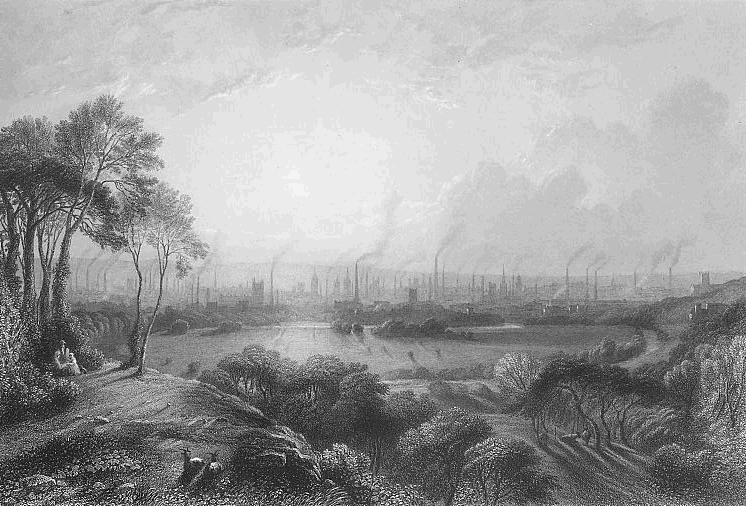
During the 18th and 19th centuries, the Industrial Revolution dramatically increased the number of people working with potentially dangerous chemicals. Factories, mines, textile mills, and chemical manufacturing facilities exposed workers to substances whose long-term health effects were not always understood.
Although chemical manufacturers developed technical information about their products, that information was not necessarily shared with workers in a consistent or accessible manner.
Some chemical formulations were closely guarded trade secrets. Even when hazards were known, the people handling the products might receive little information about the risks or how to protect themselves.
The result was a workplace environment in which chemical knowledge and chemical exposure were often separated. The manufacturer might understand the product, but the worker was the one breathing its vapors, absorbing it through the skin, or dealing with an accidental spill.
The Early 20th Century: Chemical Safety Becomes a Workplace Concern
As industrial chemistry expanded during the early 20th century, so did concerns about occupational exposure.
Industrial hygienists, physicians, labor organizations, and government agencies began investigating the relationship between chemical exposure and occupational disease.
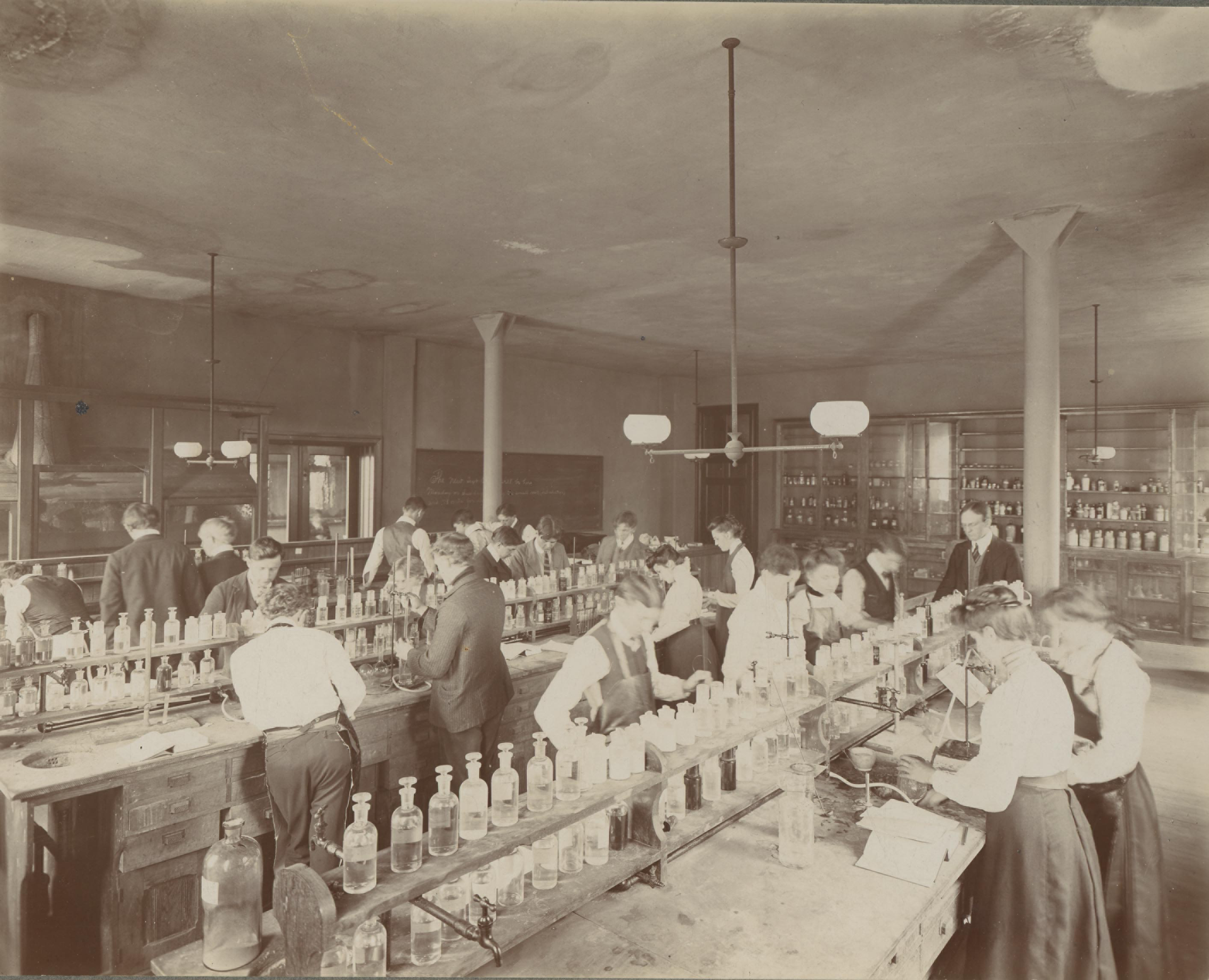
The United States Public Health Service and other organizations developed resources to help identify chemical hazards and recommend protective measures.
One important development came from the Manufacturing Chemists' Association, which began publishing Chemical Safety Data Sheets in the 1940s. These documents were an important predecessor to the modern SDS.
They provided information about chemical properties, hazards, and recommended safety precautions.
However, these early documents were not part of a comprehensive national system requiring every affected employer to provide standardized chemical hazard information to workers.
That would take several more decades.
OSHA to the Rescue?
A major turning point occurred in 1970 with the passage of the Occupational Safety and Health Act.
The law established the Occupational Safety and Health Administration (OSHA), which began operating in 1971.
OSHA's creation represented a significant change in how the federal government approached workplace safety. Rather than relying solely on individual employers or industries to determine appropriate precautions, the government now had a federal agency responsible for establishing and enforcing occupational safety and health standards.
Chemical hazards were an important part of that mission.
However, the establishment of OSHA did not immediately create the modern Safety Data Sheet system. Chemical hazard communication requirements developed over time as regulators worked to establish consistent expectations for manufacturers and employers.
The Right to Know
One of the most important milestones in the history of Safety Data Sheets came in 1983, when OSHA adopted its Hazard Communication Standard.
Often associated with the phrase "Right to Know," the standard established requirements for communicating chemical hazards in covered workplaces.
Initially, the standard focused primarily on chemical manufacturers and certain related industries. In 1987, OSHA expanded its coverage to include employees in virtually all industries where hazardous chemicals were present.
Under the Hazard Communication Standard, chemical manufacturers and importers were required to evaluate the hazards of their chemicals and communicate that information through labels and Material Safety Data Sheets.
Employers were responsible for making hazard information available to employees and providing appropriate training.
This was an important change in workplace safety philosophy.
It was no longer sufficient for a manufacturer to understand the hazards associated with a chemical. That information needed to reach the people who worked with it.
For funeral service professionals, this principle is particularly relevant. Embalmers regularly work with chemical mixtures that may contain formaldehyde, methanol, phenol, and other substances presenting significant health hazards.
Understanding those hazards is essential to selecting appropriate protective equipment, managing ventilation, responding to spills, and reducing unnecessary exposure.
The Problem With Material Safety Data Sheets
Although Material Safety Data Sheets represented a major advancement, they had a significant limitation: their format was not standardized.
A manufacturer might provide a short document containing basic safety information, while another might produce a much longer and more detailed document.
Important information could appear in different locations depending on the manufacturer.
Imagine trying to respond to a chemical spill while searching through several pages of unfamiliar formatting to find the appropriate first-aid procedures or protective equipment recommendations.
The information might have been present, but locating it quickly was not always easy.
Another complication was international trade. Different countries developed different systems for classifying chemical hazards, labeling products, and communicating safety information.
A chemical sold in the United States might be accompanied by documentation that differed considerably from information supplied for the same chemical in another country.
As chemical manufacturing and distribution became increasingly global, the need for a more consistent system became obvious.
The World Unites (Sort Of)
In 2003, the United Nations published the first edition of the Globally Harmonized System of Classification and Labelling of Chemicals, commonly called GHS.
The goal was to establish a more consistent international framework for identifying chemical hazards and communicating them to workers and other users.
GHS introduced harmonized approaches to hazard classification, labeling elements, pictograms, signal words, and Safety Data Sheet organization.
One of its most recognizable features is the standardized 16-section Safety Data Sheet format.
Instead of searching through an unfamiliar document, workers can now look for specific categories of information in predictable locations.
For example, Section 4 contains first-aid measures, Section 8 addresses exposure controls and personal protection, and Section 10 provides information about chemical stability and reactivity.
This standardized approach makes it easier to locate critical information, particularly during an emergency.
From MSDS to SDS
In 2012, OSHA revised its Hazard Communication Standard to align with the GHS framework.
One of the most visible changes was the transition from the Material Safety Data Sheet (MSDS) to the Safety Data Sheet (SDS).
This was more than a simple name change.
Under the revised standard, Safety Data Sheets were required to follow a consistent 16-section format, making information easier to find and compare.
Chemical labels also became more standardized through the use of pictograms, signal words, hazard statements, and precautionary statements.
The revised requirements were phased in over several years.
For workers, the result was a more organized approach to chemical hazard communication.
For employers, including funeral homes, the changes meant reviewing chemical inventories, maintaining updated safety documentation, and ensuring employees understood the revised labeling and documentation systems.
What Does an SDS Actually Tell You?
A modern Safety Data Sheet contains 16 sections designed to provide information about a chemical product.
The 16 Sections
- 1Identification
- 2Hazard identification
- 3Composition/information on ingredients
- 4First-aid measures
- 5Fire-fighting measures
- 6Accidental release measures
- 7Handling and storage
- 8Exposure controls/personal protection
- 9Physical and chemical properties
- 10Stability and reactivity
- 11Toxicological information
- 12Ecological information
- 13Disposal considerations
- 14Transport information
- 15Regulatory information
- 16Other information, including date of preparation or last revision
Although all 16 headings appear in the OSHA-required format, OSHA does not enforce the content requirements for Sections 12 through 15, which address matters outside its occupational safety jurisdiction.
For an embalmer, several sections are particularly valuable.
Section 2 identifies the hazards associated with the product. Section 4 explains appropriate first-aid measures. Section 7 addresses safe handling and storage, while Section 8 provides information about exposure limits, engineering controls, and personal protective equipment.
Section 10 is especially useful when evaluating chemical incompatibilities and potentially hazardous reactions.
Maybe most important in embalming application is Section 3, where the chemical composition is identified. This information can help us have a better understanding of how our chemicals work and how to apply them to our case analysis. Besides making us better embalmers, this has the following benefits:
- When we share information with each other, we have a baseline of knowledge. If your colleague uses Dodge and won't switch and you use Frigid and won't switch, you can still compare what chemicals you are using by looking at their basic components. Historically, embalming was taught to embalmers by other embalmers, so that tradition can continue with more information.
- It makes us better consumers. If your chemical rep introduces you to something new or you are considering switching to a different company, you can ask them more in-depth questions about what the chemicals in the bottle do and how they work together. This will help you make better decisions when you are learning new fluids.
- We are better communicators with families. There is more information out there about embalming than ever before, so being aware of all the elements of your chemicals can help you when discussing the benefits of embalming.
When you go to the store and are shopping for food, it is likely that you pick up the products and read the labels for the ingredients and nutritional content. Section 3 of an SDS is essentially the same thing. We get paid to put chemicals in other people's bodies, so it is our ethical responsibility to understand what they are and how they work.
The SDS is not simply a document to keep on file for an OSHA inspection. It is a practical reference that can help funeral service professionals make informed decisions about chemical safety.
Chemical Safety Continues to Evolve, and So Should Funeral Service
The history of Safety Data Sheets did not end in 2012.
In 2024, OSHA issued another update to its Hazard Communication Standard, incorporating selected provisions from newer revisions of the GHS and addressing changes in hazard classification, labeling, and safety documentation.
The purpose of these ongoing revisions is to improve the accuracy and consistency of chemical hazard information as scientific understanding and industrial practices evolve.
Importantly, GHS itself is not a single worldwide law. It is an international framework that individual countries and jurisdictions incorporate into their own regulatory systems.
That means employers must continue to follow the specific regulations applicable to their workplaces.
SDS Myths: What You Think You Know About Chemical Safety Might Be Wrong
Despite having been part of workplace safety for decades, Safety Data Sheets remain one of the most misunderstood documents in the preparation room. Most embalmers know they exist, many know where to find them, but how many actually understand what they contain?
Let's clear up a few misconceptions.
If I Have an SDS Binder, I'm OSHA Compliant
Having a binder full of Safety Data Sheets is a good start, but it doesn't automatically mean you're complying with OSHA's Hazard Communication Standard.
Employers must also maintain an appropriate written hazard communication program, ensure hazardous chemical containers are properly labeled, provide employee training, and make Safety Data Sheets readily accessible during each work shift.
An SDS binder collecting dust in the preparation room or holding up the short leg of the couch in your chapel isn't doing anyone much good if employees don't know how to use it.
Every Chemical in the Preparation Room Needs an SDS
OSHA generally requires Safety Data Sheets for hazardous chemicals covered by its Hazard Communication Standard, not every substance that happens to be present.
Certain products and circumstances are exempt. For example, consumer products may qualify for an exemption when their workplace use is comparable in duration and frequency to ordinary consumer use.
However, using a household cleaning product extensively in a commercial preparation room may take it outside that exemption.
The important question isn't whether a chemical is familiar. It's whether it is hazardous and covered by the applicable regulation.
Manufacturers Have to Tell Me Every Ingredient in Their Products
Although Section 3 of an SDS provides information about chemical ingredients, manufacturers may withhold certain information as a legitimate trade secret when they meet OSHA's requirements. Chemicals that are non-hazardous, such as water, also don't have to be listed.
This means an SDS doesn't necessarily reveal every ingredient or the exact formula of an embalming fluid.
However, trade secret protections do not eliminate the manufacturer's obligation to communicate the product's hazards. OSHA also provides mechanisms for disclosing protected information to healthcare professionals and others under specified circumstances.
So, while an SDS can tell you a great deal about a product, it isn't necessarily a complete recipe.
If a Chemical Doesn't Have a Skull and Crossbones, It Isn't Dangerous
The skull and crossbones pictogram identifies certain acute toxicity hazards, but it is only one of several hazard pictograms.
A chemical might present serious health hazards without displaying that particular symbol.
Formaldehyde, for example, presents significant concerns associated with inhalation exposure, skin sensitization, and carcinogenicity.
A product doesn't have to cause immediate poisoning to present a substantial occupational hazard.
In fact, some of the most important risks associated with chemical exposure develop gradually over time.
If I Dilute an Embalming Fluid, the Hazards Disappear
Dilution can reduce the concentration of hazardous ingredients, but it doesn't automatically eliminate the hazards associated with those ingredients.
An embalming solution containing diluted formaldehyde may still present inhalation or skin exposure concerns depending on its concentration, use, and conditions of exposure.
Furthermore, the SDS supplied with a concentrated embalming fluid generally describes the product as supplied by the manufacturer. Its hazard classification and protective recommendations may not precisely describe every possible diluted working solution.
Understanding dilution is important, but so is understanding the difference between a product's concentration and the actual exposure experienced by the embalmer.
An SDS Tells Me Exactly What PPE I Must Wear
Section 8 provides recommendations concerning exposure controls and personal protective equipment, but those recommendations must be considered alongside the actual workplace conditions and applicable OSHA standards.
The appropriate PPE can depend on the task, the route and magnitude of exposure, and the results of the employer's hazard assessment.
For example, an SDS might identify respiratory protection considerations, but that doesn't automatically mean an embalmer should grab any available respirator.
When respirators are required, OSHA has specific requirements concerning respirator selection, medical evaluation, fit testing, training, and a respiratory protection program.
The SDS provides essential information, but it doesn't replace a proper workplace hazard assessment.
Safety Data Sheets Have to Be Kept in a Physical Binder
OSHA allows Safety Data Sheets to be maintained electronically, provided employees can readily access the information during their work shifts without barriers.
That means a funeral home can maintain an electronic SDS library instead of a traditional binder.
However, the system must provide reliable access, including appropriate backup arrangements if electronic access becomes unavailable.
An SDS stored somewhere in the manager's email or behind a password employees don't have isn't particularly useful during a chemical emergency.
Safety Data Sheets Expire Every Three or Five Years
OSHA does not establish a universal expiration date requiring every SDS to be replaced after a particular number of years.
Manufacturers and importers are required to update Safety Data Sheets when they become aware of significant new information about a chemical's hazards or ways to protect against those hazards, generally within three months.
That doesn't mean funeral homes should ignore the dates on their documents. Periodically reviewing SDS records and checking with suppliers for updated versions is good practice.
But an older SDS isn't automatically invalid simply because of its age.
If I Have an SDS, I Don't Need Chemical Safety Training
OSHA requires employers to provide effective information and training about hazardous chemicals at the time of an employee's initial assignment and whenever a new chemical hazard is introduced into the work area.
Simply handing someone a Safety Data Sheet or showing them where the binder is located does not necessarily satisfy that requirement.
Employees need to understand the hazards, protective measures, methods of detecting releases, and the details of their employer's hazard communication program.
A Safety Data Sheet is a resource, not a substitute for education.
An SDS Tells Me Whether a Chemical Is Safe
This might be the biggest misconception of all.
An SDS describes the hazards of a chemical product and provides information about precautions, handling, and emergency response. It does not guarantee that a product is safe under every condition of use.
There is an important distinction between a hazard and a risk.
A hazard is a substance's potential to cause harm. Risk considers the likelihood and severity of that harm under particular exposure conditions.
Formaldehyde presents hazards regardless of whether an embalmer is exposed to it. The actual risk depends on factors such as concentration, ventilation, duration of exposure, and protective measures.
Understanding this distinction is essential to making informed decisions in the preparation room.
Why This History Matters in the Preparation Room
Consider how much the preparation room has changed over the past century.
Embalming chemicals have evolved. Equipment has improved. Ventilation systems, protective clothing, and our understanding of occupational exposure have all advanced.
But one of the most important changes has been the availability of information.
An embalmer working in the early 20th century might have known a product's trade name and recommended dilution but had limited access to information about its chemical composition or potential health effects.
Today, an embalmer can consult an SDS to investigate the hazards associated with a product, identify recommended protective measures, review first-aid procedures, and better understand the precautions necessary for safe handling. In addition, by knowing what our chemicals are, we know how to apply them better during embalming.
That information is valuable only if we actually use it.
Knowing where the SDS binder is located, or how to access electronic Safety Data Sheets, is important. Understanding what the documents contain and how to interpret that information is even more important.
A Safety Data Sheet cannot prevent an accident by itself. It cannot replace proper ventilation, appropriate protective equipment, training, or sound professional judgment.
What it can do is provide the information needed to make better decisions.
The history of Safety Data Sheets is ultimately a history of changing expectations.
For centuries, chemical knowledge was largely controlled by the people who manufactured, studied, or sold chemical substances.
Over time, industrial accidents, occupational illnesses, scientific research, and regulatory changes helped establish a different expectation: people working with hazardous chemicals deserve access to information about those hazards.
From early chemical safety publications to the Material Safety Data Sheets of the 20th century and today's standardized Safety Data Sheets, the goal has remained remarkably consistent.
The more we understand about the chemicals we work with, the better equipped we are to protect ourselves and those around us.
For funeral service professionals, that is more than a regulatory obligation. It is part of being a knowledgeable, responsible, and professional embalmer.
Fun fact: businesses had a version of an SDS long before the workers did. Today, we take Safety Data Sheets (SDS) for granted. Whether you're working in a funeral home's preparation room, a laboratory, a manufacturing facility, or just about any other workplace that handles hazardous chemicals, these documents provide information about chemical hazards, safe handling, personal protective equipment, emergency procedures, and more.
But where did they come from? Who decided that manufacturers needed to tell workers what was in the chemicals they were using? And why did the familiar Material Safety Data Sheet (MSDS) become the Safety Data Sheet (SDS)?
The answers take us through centuries of chemical discovery, industrial growth, occupational disease, and a gradual recognition that workers have a right to understand the hazards they encounter.
- 1500sParacelsus, "the dose makes the poison"
- 1700s to 1800sIndustrial Revolution puts more workers near chemicals
- 1940sManufacturing Chemists' Association publishes Chemical Safety Data Sheets
- 1970Occupational Safety and Health Act (OSHA operating 1971)
- 1983Hazard Communication Standard, "Right to Know"
- 1987Coverage expands to nearly all industries
- 2003UN publishes GHS
- 2012OSHA aligns with GHS, MSDS becomes SDS
- 2024OSHA updates HazCom again
Before Safety Data Sheets: When Chemical Knowledge Was a Trade Secret
Long before anyone thought about standardized chemical safety documents, physicians, scientists, and industrial workers recognized that certain substances could cause serious illness or death.
As early as the 16th century, the Swiss physician Paracelsus helped establish one of the fundamental principles of toxicology: the dose makes the poison. In other words, the amount of a substance to which someone is exposed plays a critical role in determining its harmful effects. We should certainly keep this in mind whenever chemicals are used as a boogeyman. Even water is toxic in high doses.
During the 18th and 19th centuries, the Industrial Revolution dramatically increased the number of people working with potentially dangerous chemicals. Factories, mines, textile mills, and chemical manufacturing facilities exposed workers to substances whose long-term health effects were not always understood.
Although chemical manufacturers developed technical information about their products, that information was not necessarily shared with workers in a consistent or accessible manner.
Some chemical formulations were closely guarded trade secrets. Even when hazards were known, the people handling the products might receive little information about the risks or how to protect themselves.
The result was a workplace environment in which chemical knowledge and chemical exposure were often separated. The manufacturer might understand the product, but the worker was the one breathing its vapors, absorbing it through the skin, or dealing with an accidental spill.
The Early 20th Century: Chemical Safety Becomes a Workplace Concern
As industrial chemistry expanded during the early 20th century, so did concerns about occupational exposure.
Industrial hygienists, physicians, labor organizations, and government agencies began investigating the relationship between chemical exposure and occupational disease.
The United States Public Health Service and other organizations developed resources to help identify chemical hazards and recommend protective measures.
One important development came from the Manufacturing Chemists' Association, which began publishing Chemical Safety Data Sheets in the 1940s. These documents were an important predecessor to the modern SDS.
They provided information about chemical properties, hazards, and recommended safety precautions.
However, these early documents were not part of a comprehensive national system requiring every affected employer to provide standardized chemical hazard information to workers.
That would take several more decades.
OSHA to the Rescue?
A major turning point occurred in 1970 with the passage of the Occupational Safety and Health Act.
The law established the Occupational Safety and Health Administration (OSHA), which began operating in 1971.
OSHA's creation represented a significant change in how the federal government approached workplace safety. Rather than relying solely on individual employers or industries to determine appropriate precautions, the government now had a federal agency responsible for establishing and enforcing occupational safety and health standards.
Chemical hazards were an important part of that mission.
However, the establishment of OSHA did not immediately create the modern Safety Data Sheet system. Chemical hazard communication requirements developed over time as regulators worked to establish consistent expectations for manufacturers and employers.
The Right to Know
One of the most important milestones in the history of Safety Data Sheets came in 1983, when OSHA adopted its Hazard Communication Standard.
Often associated with the phrase "Right to Know," the standard established requirements for communicating chemical hazards in covered workplaces.
Initially, the standard focused primarily on chemical manufacturers and certain related industries. In 1987, OSHA expanded its coverage to include employees in virtually all industries where hazardous chemicals were present.
Under the Hazard Communication Standard, chemical manufacturers and importers were required to evaluate the hazards of their chemicals and communicate that information through labels and Material Safety Data Sheets.
Employers were responsible for making hazard information available to employees and providing appropriate training.
This was an important change in workplace safety philosophy.
It was no longer sufficient for a manufacturer to understand the hazards associated with a chemical. That information needed to reach the people who worked with it.
For funeral service professionals, this principle is particularly relevant. Embalmers regularly work with chemical mixtures that may contain formaldehyde, methanol, phenol, and other substances presenting significant health hazards.
Understanding those hazards is essential to selecting appropriate protective equipment, managing ventilation, responding to spills, and reducing unnecessary exposure.
The Problem With Material Safety Data Sheets
Although Material Safety Data Sheets represented a major advancement, they had a significant limitation: their format was not standardized.
A manufacturer might provide a short document containing basic safety information, while another might produce a much longer and more detailed document.
Important information could appear in different locations depending on the manufacturer.
Imagine trying to respond to a chemical spill while searching through several pages of unfamiliar formatting to find the appropriate first-aid procedures or protective equipment recommendations.
The information might have been present, but locating it quickly was not always easy.
Another complication was international trade. Different countries developed different systems for classifying chemical hazards, labeling products, and communicating safety information.
A chemical sold in the United States might be accompanied by documentation that differed considerably from information supplied for the same chemical in another country.
As chemical manufacturing and distribution became increasingly global, the need for a more consistent system became obvious.
The World Unites (Sort Of)
In 2003, the United Nations published the first edition of the Globally Harmonized System of Classification and Labelling of Chemicals, commonly called GHS.
The goal was to establish a more consistent international framework for identifying chemical hazards and communicating them to workers and other users.
GHS introduced harmonized approaches to hazard classification, labeling elements, pictograms, signal words, and Safety Data Sheet organization.
One of its most recognizable features is the standardized 16-section Safety Data Sheet format.
Instead of searching through an unfamiliar document, workers can now look for specific categories of information in predictable locations.
For example, Section 4 contains first-aid measures, Section 8 addresses exposure controls and personal protection, and Section 10 provides information about chemical stability and reactivity.
This standardized approach makes it easier to locate critical information, particularly during an emergency.
From MSDS to SDS
In 2012, OSHA revised its Hazard Communication Standard to align with the GHS framework.
One of the most visible changes was the transition from the Material Safety Data Sheet (MSDS) to the Safety Data Sheet (SDS).
This was more than a simple name change.
Under the revised standard, Safety Data Sheets were required to follow a consistent 16-section format, making information easier to find and compare.
Chemical labels also became more standardized through the use of pictograms, signal words, hazard statements, and precautionary statements.
The revised requirements were phased in over several years.
For workers, the result was a more organized approach to chemical hazard communication.
For employers, including funeral homes, the changes meant reviewing chemical inventories, maintaining updated safety documentation, and ensuring employees understood the revised labeling and documentation systems.
What Does an SDS Actually Tell You?
A modern Safety Data Sheet contains 16 sections designed to provide information about a chemical product.
The 16 Sections
- 1Identification
- 2Hazard identification
- 3Composition/information on ingredients
- 4First-aid measures
- 5Fire-fighting measures
- 6Accidental release measures
- 7Handling and storage
- 8Exposure controls/personal protection
- 9Physical and chemical properties
- 10Stability and reactivity
- 11Toxicological information
- 12Ecological information
- 13Disposal considerations
- 14Transport information
- 15Regulatory information
- 16Other information, including date of preparation or last revision
Although all 16 headings appear in the OSHA-required format, OSHA does not enforce the content requirements for Sections 12 through 15, which address matters outside its occupational safety jurisdiction.
For an embalmer, several sections are particularly valuable.
Section 2 identifies the hazards associated with the product. Section 4 explains appropriate first-aid measures. Section 7 addresses safe handling and storage, while Section 8 provides information about exposure limits, engineering controls, and personal protective equipment.
Section 10 is especially useful when evaluating chemical incompatibilities and potentially hazardous reactions.
Maybe most important in embalming application is Section 3, where the chemical composition is identified. This information can help us have a better understanding of how our chemicals work and how to apply them to our case analysis. Besides making us better embalmers, this has the following benefits:
- When we share information with each other, we have a baseline of knowledge. If your colleague uses Dodge and won't switch and you use Frigid and won't switch, you can still compare what chemicals you are using by looking at their basic components. Historically, embalming was taught to embalmers by other embalmers, so that tradition can continue with more information.
- It makes us better consumers. If your chemical rep introduces you to something new or you are considering switching to a different company, you can ask them more in-depth questions about what the chemicals in the bottle do and how they work together. This will help you make better decisions when you are learning new fluids.
- We are better communicators with families. There is more information out there about embalming than ever before, so being aware of all the elements of your chemicals can help you when discussing the benefits of embalming.
When you go to the store and are shopping for food, it is likely that you pick up the products and read the labels for the ingredients and nutritional content. Section 3 of an SDS is essentially the same thing. We get paid to put chemicals in other people's bodies, so it is our ethical responsibility to understand what they are and how they work.
The SDS is not simply a document to keep on file for an OSHA inspection. It is a practical reference that can help funeral service professionals make informed decisions about chemical safety.
Chemical Safety Continues to Evolve, and So Should Funeral Service
The history of Safety Data Sheets did not end in 2012.
In 2024, OSHA issued another update to its Hazard Communication Standard, incorporating selected provisions from newer revisions of the GHS and addressing changes in hazard classification, labeling, and safety documentation.
The purpose of these ongoing revisions is to improve the accuracy and consistency of chemical hazard information as scientific understanding and industrial practices evolve.
Importantly, GHS itself is not a single worldwide law. It is an international framework that individual countries and jurisdictions incorporate into their own regulatory systems.
That means employers must continue to follow the specific regulations applicable to their workplaces.
SDS Myths: What You Think You Know About Chemical Safety Might Be Wrong
Despite having been part of workplace safety for decades, Safety Data Sheets remain one of the most misunderstood documents in the preparation room. Most embalmers know they exist, many know where to find them, but how many actually understand what they contain?
Let's clear up a few misconceptions.
If I Have an SDS Binder, I'm OSHA Compliant
Having a binder full of Safety Data Sheets is a good start, but it doesn't automatically mean you're complying with OSHA's Hazard Communication Standard.
Employers must also maintain an appropriate written hazard communication program, ensure hazardous chemical containers are properly labeled, provide employee training, and make Safety Data Sheets readily accessible during each work shift.
An SDS binder collecting dust in the preparation room or holding up the short leg of the couch in your chapel isn't doing anyone much good if employees don't know how to use it.
Every Chemical in the Preparation Room Needs an SDS
OSHA generally requires Safety Data Sheets for hazardous chemicals covered by its Hazard Communication Standard, not every substance that happens to be present.
Certain products and circumstances are exempt. For example, consumer products may qualify for an exemption when their workplace use is comparable in duration and frequency to ordinary consumer use.
However, using a household cleaning product extensively in a commercial preparation room may take it outside that exemption.
The important question isn't whether a chemical is familiar. It's whether it is hazardous and covered by the applicable regulation.
Manufacturers Have to Tell Me Every Ingredient in Their Products
Although Section 3 of an SDS provides information about chemical ingredients, manufacturers may withhold certain information as a legitimate trade secret when they meet OSHA's requirements. Chemicals that are non-hazardous, such as water, also don't have to be listed.
This means an SDS doesn't necessarily reveal every ingredient or the exact formula of an embalming fluid.
However, trade secret protections do not eliminate the manufacturer's obligation to communicate the product's hazards. OSHA also provides mechanisms for disclosing protected information to healthcare professionals and others under specified circumstances.
So, while an SDS can tell you a great deal about a product, it isn't necessarily a complete recipe.
If a Chemical Doesn't Have a Skull and Crossbones, It Isn't Dangerous
The skull and crossbones pictogram identifies certain acute toxicity hazards, but it is only one of several hazard pictograms.
A chemical might present serious health hazards without displaying that particular symbol.
Formaldehyde, for example, presents significant concerns associated with inhalation exposure, skin sensitization, and carcinogenicity.
A product doesn't have to cause immediate poisoning to present a substantial occupational hazard.
In fact, some of the most important risks associated with chemical exposure develop gradually over time.
If I Dilute an Embalming Fluid, the Hazards Disappear
Dilution can reduce the concentration of hazardous ingredients, but it doesn't automatically eliminate the hazards associated with those ingredients.
An embalming solution containing diluted formaldehyde may still present inhalation or skin exposure concerns depending on its concentration, use, and conditions of exposure.
Furthermore, the SDS supplied with a concentrated embalming fluid generally describes the product as supplied by the manufacturer. Its hazard classification and protective recommendations may not precisely describe every possible diluted working solution.
Understanding dilution is important, but so is understanding the difference between a product's concentration and the actual exposure experienced by the embalmer.
An SDS Tells Me Exactly What PPE I Must Wear
Section 8 provides recommendations concerning exposure controls and personal protective equipment, but those recommendations must be considered alongside the actual workplace conditions and applicable OSHA standards.
The appropriate PPE can depend on the task, the route and magnitude of exposure, and the results of the employer's hazard assessment.
For example, an SDS might identify respiratory protection considerations, but that doesn't automatically mean an embalmer should grab any available respirator.
When respirators are required, OSHA has specific requirements concerning respirator selection, medical evaluation, fit testing, training, and a respiratory protection program.
The SDS provides essential information, but it doesn't replace a proper workplace hazard assessment.
Safety Data Sheets Have to Be Kept in a Physical Binder
OSHA allows Safety Data Sheets to be maintained electronically, provided employees can readily access the information during their work shifts without barriers.
That means a funeral home can maintain an electronic SDS library instead of a traditional binder.
However, the system must provide reliable access, including appropriate backup arrangements if electronic access becomes unavailable.
An SDS stored somewhere in the manager's email or behind a password employees don't have isn't particularly useful during a chemical emergency.
Safety Data Sheets Expire Every Three or Five Years
OSHA does not establish a universal expiration date requiring every SDS to be replaced after a particular number of years.
Manufacturers and importers are required to update Safety Data Sheets when they become aware of significant new information about a chemical's hazards or ways to protect against those hazards, generally within three months.
That doesn't mean funeral homes should ignore the dates on their documents. Periodically reviewing SDS records and checking with suppliers for updated versions is good practice.
But an older SDS isn't automatically invalid simply because of its age.
If I Have an SDS, I Don't Need Chemical Safety Training
OSHA requires employers to provide effective information and training about hazardous chemicals at the time of an employee's initial assignment and whenever a new chemical hazard is introduced into the work area.
Simply handing someone a Safety Data Sheet or showing them where the binder is located does not necessarily satisfy that requirement.
Employees need to understand the hazards, protective measures, methods of detecting releases, and the details of their employer's hazard communication program.
A Safety Data Sheet is a resource, not a substitute for education.
An SDS Tells Me Whether a Chemical Is Safe
This might be the biggest misconception of all.
An SDS describes the hazards of a chemical product and provides information about precautions, handling, and emergency response. It does not guarantee that a product is safe under every condition of use.
There is an important distinction between a hazard and a risk.
A hazard is a substance's potential to cause harm. Risk considers the likelihood and severity of that harm under particular exposure conditions.
Formaldehyde presents hazards regardless of whether an embalmer is exposed to it. The actual risk depends on factors such as concentration, ventilation, duration of exposure, and protective measures.
Understanding this distinction is essential to making informed decisions in the preparation room.
Why This History Matters in the Preparation Room
Consider how much the preparation room has changed over the past century.
Embalming chemicals have evolved. Equipment has improved. Ventilation systems, protective clothing, and our understanding of occupational exposure have all advanced.
But one of the most important changes has been the availability of information.
An embalmer working in the early 20th century might have known a product's trade name and recommended dilution but had limited access to information about its chemical composition or potential health effects.
Today, an embalmer can consult an SDS to investigate the hazards associated with a product, identify recommended protective measures, review first-aid procedures, and better understand the precautions necessary for safe handling. In addition, by knowing what our chemicals are, we know how to apply them better during embalming.
That information is valuable only if we actually use it.
Knowing where the SDS binder is located, or how to access electronic Safety Data Sheets, is important. Understanding what the documents contain and how to interpret that information is even more important.
A Safety Data Sheet cannot prevent an accident by itself. It cannot replace proper ventilation, appropriate protective equipment, training, or sound professional judgment.
What it can do is provide the information needed to make better decisions.
The history of Safety Data Sheets is ultimately a history of changing expectations.
For centuries, chemical knowledge was largely controlled by the people who manufactured, studied, or sold chemical substances.
Over time, industrial accidents, occupational illnesses, scientific research, and regulatory changes helped establish a different expectation: people working with hazardous chemicals deserve access to information about those hazards.
From early chemical safety publications to the Material Safety Data Sheets of the 20th century and today's standardized Safety Data Sheets, the goal has remained remarkably consistent.
The more we understand about the chemicals we work with, the better equipped we are to protect ourselves and those around us.
For funeral service professionals, that is more than a regulatory obligation. It is part of being a knowledgeable, responsible, and professional embalmer.