
Of course, we all know the exposure limits by heart because they are drummed into us by our embalming, mortuary law, and chemistry teachers in mortuary school. Test questions on this topic are such a low hanging fruit that I tell my students that I should be able to walk up to them unannounced and out of context and demand they tell me the Action Limit of formaldehyde (.05 ppm). Before we talk about the OSHA guidelines, it might be fun to learn a little bit more about the history of formaldehyde and funeral service.
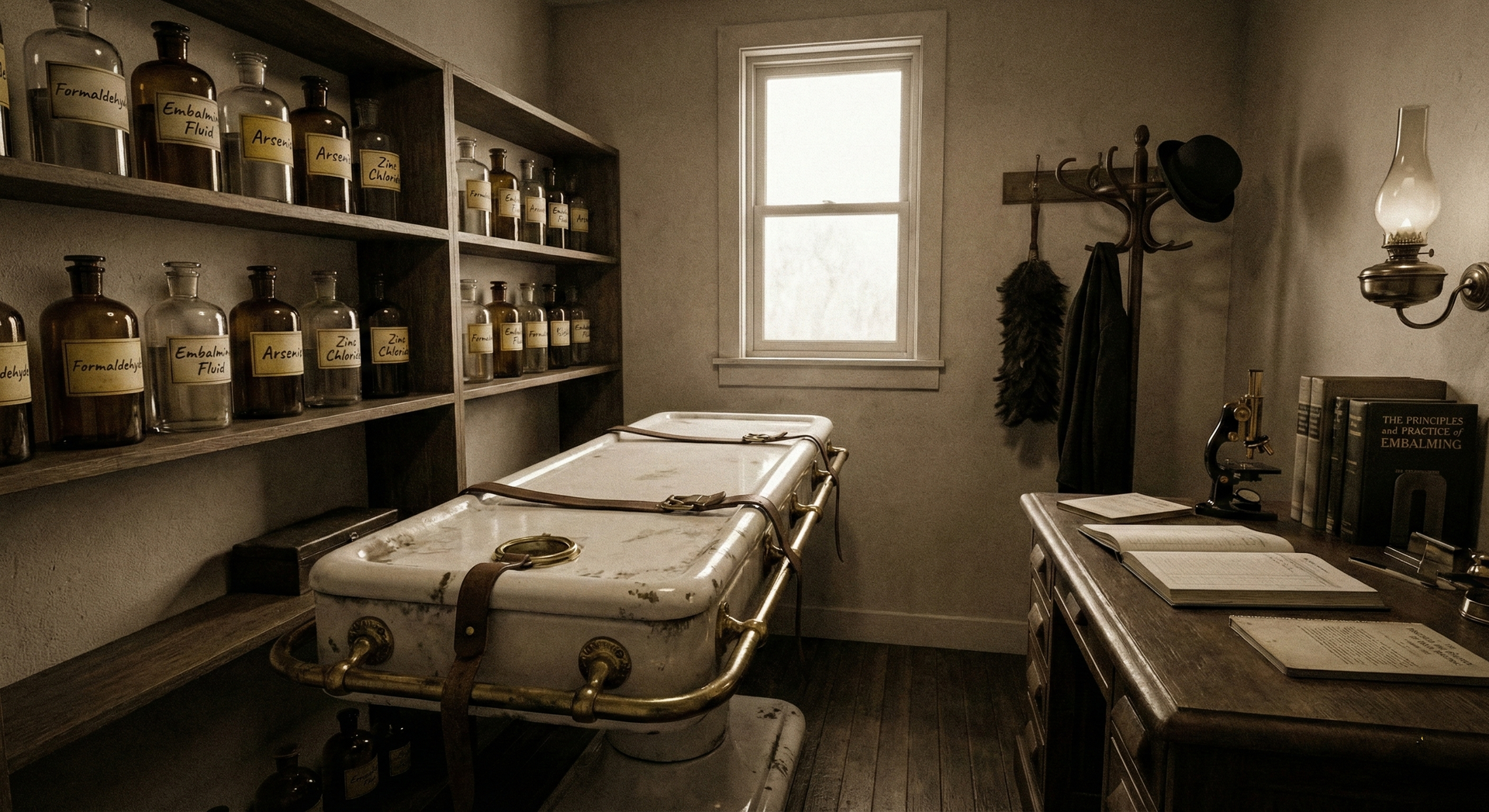
Formaldehyde has been part of funeral service for a little over a century. It was first synthesized in 1859 and further characterized by August Wilhelm von Hofman in 1867. It was noted as a preservative and disinfectant, but for lab work only. If you are following with your own knowledge of embalming history, you will note that the rise of popularity in embalming was taking place at about the same time. As embalming became more popular, embalmers began experimenting with it in the 1880’s because preceding chemicals such as arsenic, mercury chloride, and zinc chloride were effective but dangerous. This is really saying something considering some of the health standards in the late 1800’s. Formaldehyde based solutions began to appear in embalming supply catalogs in the 1890’s. As funeral service began to professionalize in the early 20th century, chemical manufacturers standardized their fluid manufacturing and formaldehyde became the default chemical in funeral service because it was low cost, readily available, and very effective. By the time the Occupational Health and Safety Administration was created in 1970, formaldehyde had been embedded in funeral service for over 70 years with little occupational health scrutiny.
For generations of embalmers, it was simply the chemical and rarely questioned. Yet the OSHA formaldehyde exposure rule did not emerge quietly or easily. It was shaped by decades of evolving science, social pressure, courtroom battles, and highly visible public controversies that forced regulators to confront a difficult truth: tradition is not the same as safety.
Understanding why the rule exists and the social forces behind it matter, especially in funeral service, where exposure can be routine, cumulative, and culturally normalized.
A Time When “Irritating” Was Considered Cool
Prior to the 1970s, formaldehyde was widely acknowledged to be unpleasant but manageable. Eye irritation, coughing, and throat burning were seen as part of the job in laboratories, textile plants, anatomy labs, and embalming rooms. In funeral service, stories of “watering eyes” and “strong prep room smells” were passed down almost as rites of passage. One might say that these rights of passage still exist in prep rooms all over to this day.
This mindset reflected a broader industrial culture of the time: if a chemical worked, worker discomfort was secondary. Sound familiar? Here’s a phrase you might have heard before; “skin grows back; caskets don’t.” Exposure limits, when they existed, were often based on what workers could tolerate rather than what toxicology suggested was safe.
The creation of OSHA in 1970 marked a turning point. The federal government formally accepted responsibility for preventing occupational disease, not just traumatic injury. Formaldehyde quickly became a problem chemical in this new regulatory world because it was everywhere and increasingly difficult to ignore.
Science Meets Public Awareness
By the late 1970s and early 1980s, scientific evidence had outpaced workplace norms. Researchers documented that formaldehyde was not just irritating, but capable of causing persistent respiratory inflammation, asthma-like symptoms, and cellular damage in the nasal passages. Animal studies showed nasal cancers.
Before we continue, I would like for you to take moment and evaluate some of the more prominent studies on this topic for yourself;
Human evidence for a link to cancer is mixed;
Multiple occupational cohort and case-control studies detect associations with nasopharyngeal cancer and hematopoietic cancers in workers exposed to formaldehyde.
Agencies like IARC (International Agency for Research on Cancer) and NTP (U.S. National Toxicology Program) have considered this evidence strong enough to support carcinogen classification (highlighted agency names link to their analysis).
However, not all epidemiologic studies show statistically significant associations, and some pooled analyses have yielded mixed results depending on case definition, exposure estimation, and cohort makeup. Some studies find elevated risks only at higher exposures (e.g., industrial settings, heavy occupational use), which complicates risk interpretation at typical workplace levels.
Formaldehyde and cancer risk: a quantitative review of cohort studies through 2006
A review and meta-analysis of formaldehyde exposure and leukemia
Okay, now back to our story.
At the same time, formaldehyde escaped the workplace and entered the public consciousness. Media coverage of urea-formaldehyde foam insulation in homes brought the chemical into living rooms, schools, and congressional hearings. Suddenly, formaldehyde wasn’t just an “industrial smell,” it was a household concern.
This broader social awareness mattered. When the public begins associating a chemical with cancer, regulators are no longer dealing with abstract risk models; they are responding to fear, trust, and accountability.
The OSHA Rule and Why It Was Controversial
OSHA’s first comprehensive formaldehyde standard in 1987 attempted to translate this growing body of science into enforceable limits. It introduced exposure monitoring, medical surveillance, labeling, training, and regulated areas, concepts that were new and disruptive in many workplaces, including funeral homes. As a reminder, the Federal Trade Commission’s Funeral Rule passed in 1984 so...
The rule was immediately challenged.
Industry groups argued the science was uncertain, and the costs were unreasonable. Labor organizations argued the limits were not strict enough given cancer risk. Courts got involved. OSHA revised the rule in 1992, lowering the permissible exposure limit and strengthening worker protections.
What’s important here is not just the final numbers (0.75 ppm TWA, 2 ppm STEL), but the message: Formaldehyde was being regulated as a serious occupational health hazard.
Funeral Service: The Quiet Outlier (As Usual)
Unlike chemical plants or factories, funeral homes rarely made headlines during this process. Yet embalmers are among the workers with some of the most consistent formaldehyde exposure.
Why the silence?
Part of it is cultural. Funeral service has long prized toughness, discretion, and tradition. Complaining about chemicals could be seen as questioning established practice or professional competence. Many embalmers learned from mentors who worked decades without ventilation standards or exposure monitoring, reinforcing the idea that “this is just how it is.”
Another factor is scale. Funeral homes are small workplaces. Their exposures are intermittent but repetitive. That makes them easy to overlook statistically regardless of biology.
OSHA’s rule forced funeral service to confront something uncomfortable: the prep room is a regulated workplace, not a private craft space exempt from modern occupational health science.
What OSHA Actually Requires Funeral Homes to Do
One of the most persistent misconceptions in funeral service is that OSHA formaldehyde monitoring is only required for large facilities or “problem” prep rooms. In reality, OSHA’s formaldehyde standard applies to any funeral home where employees may be exposed, regardless of size or call volume.
Under 29 CFR 1910.1048, a funeral home is required to evaluate employee exposure whenever formaldehyde is used in a way that could reasonably exceed regulatory thresholds. Because of the nature of embalming, it is often assumed by default.
A quick reminder and definition of some of our terms:
Inhalation‐Induced Nasal Squamous Cell Carcinomas in Rats
Groups of male and female rats exposed to 15 ppm formaldehyde vapor (6 hr/day, 5 days/week) developed squamous cell carcinomas in the nasal cavity after ~18 months of exposure
Chronic Inhalation Carcinogenicity Bioassay
In this long-term study, both rats and mice were exposed by inhalation to formaldehyde (2.0–14.3 ppm) over ~24 months.
Historical Chemical Industry Study Reported to CPSC (1979)
Early industry research conducted under the Chemical Industry Institute of Toxicology (CIIT) showed preliminary evidence that rats exposed to formaldehyde vapor (≈15 ppm) developed nasal cancers visible within ~16 months of exposure.
Permissible Exposure Limit
The maximum average exposure an employee is legally allowed to experience over a standard workday and the measurement of 0.75 ppm averaged over an 8-hour work shift
Action Level
The airborne concentration of a chemical that triggers specific OSHA requirements, even though it is not the maximum allowed exposure and is the measurement of 0.5 parts per million (ppm) as an 8-hour time-weighted average (TWA)
One way you can consider these two thresholds is to picture a traffic light. Anything under .5 ppm is a green light. Once it hits the AL, that is when the light turns yellow because you must proceed with caution.
When the measurement hits .75 ppm, you are now at a red light. As we will see below, there are things you must do.
And let's not forget the third measurement of 2.0 ppm as a 15-minute short-term exposure limit (STEL). This limit exists because formaldehyde can cause acute effects such as burning eyes, coughing, chest tightness, which as anyone who has spilled a few drops of 50 index cavity fluid knows, can occur very quickly.
So what happens at these limits?

Reaching or exceeding the Action Level
Funeral home must take additional steps, such as:
- Conducting periodic exposure monitoring
- Providing formaldehyde training
- Offering medical surveillance to affected employees

Reaching the Permissible Exposure Limit
Exceeding the PEL dictates that a funeral home must take the following additional steps, such as:
- Reducing exposure by evaluating engineering and work practice controls
- Respiratory protection until improvements are made. This is meant to be a short term solution, not a permanent one
- Mandatory medical surveillance
- Continued monitoring; one passing test is not enough
- Employee notification and documentation
Short-Term Exposure Limit
Exceeding the STEL is treated by OSHA as an urgent exposure failure, even if the daily average (PEL) is not exceeded. At this point these steps must be followed:
- Immediate exposure control
- Respiratory protection is mandatory
- Engineering controls must be evaluated
- Medical evaluation may be triggered
- Monitoring must continue
Now keep in mind that these levels do not just apply to funeral service.
We are far from the only place that uses formaldehyde, so when you read this, please do not grumble about spilling cavity fluid occasionally and having your eyes burn. Instead, imagine you are working in a wood treatment plant and a shipping tank full of formalin starts to leak everywhere. Kind of puts it in perspective, doesn’t it?
Okay, So What Does Monitoring Look Like?
Monitoring typically involves personal air sampling, where a small sampling device is worn in the employee’s breathing zone during embalming activities. Area sampling alone is not sufficient to demonstrate compliance.
Sampling must reflect worst-case conditions, such as:
- First case of the day
- Poor ventilation scenarios
- High-index fluids
- Long arterial injections
Can a Funeral Home Avoid Testing?
Possibly, but only with objective data. OSHA allows employers to forego monitoring if they can demonstrate, through reliable, documented data, that exposures will remain below the Action Level and STEL under all expected conditions.
This might include:
- Valid third-party studies on identical ventilation systems
- Manufacturer data paired with conservative assumptions
- Prior monitoring results that are still representative
A verbal assurance, industry tradition, or “we’ve never had a problem” does not meet this standard.
Recordkeeping and Transparency
Monitoring results must be:
- Shared with employees
- Documented and retained
- Used to guide safety decisions, not filed away and forgotten
This transparency requirement exists precisely because formaldehyde exposure can be normalized over time, especially in professions where irritation has historically been accepted as “part of the job.”
Why This Matters in Funeral Service
OSHA’s testing requirements are not about assuming wrongdoing. They exist because exposure perception is unreliable. By the time a prep room “doesn’t smell that bad,” olfactory fatigue has often already set in. As someone who has embalmed alongside hundreds of students I can tell you that different people experience reactions at a different levels, even if they work in a funeral home while going to school and the facility we were working in met the OSHA formaldehyde guidelines.
Allow me to share a story with you about a conversation that I had with a student that put this in perspective for me:
Student
Ben, every morning after lab I throw up.
Me
Well, have you been going out after lab?
Student
No, and that’s why I am telling you this.
Me
Well, have you been going out after lab?
Student
No, and that’s why I am telling you this.
Me
Do you work in a funeral home? Maybe you have a formaldehyde allergy you didn’t know about?
Student
I do work in a funeral home, and I never have this problem.
Me
Maybe you should get a respirator and see if it helps
Student
*Gets respirator, solves problem*
My point is here because of the cases we faced in embalming lab and required a higher solution concentration; this student had a reaction because the levels were higher than they were used to.
In funeral service, monitoring is less about catching violations and more about replacing tradition-based safety with evidence-based practice because everyone reacts differently.

THE BRAZILIAN BLOWOUT
Learn about the key decisions that have shaped our identity.

One of the most visible modern flashpoints in the formaldehyde conversation came not from laboratories or funeral homes, but from hair salons. In the early 2010s, so-called Brazilian Blowout and other keratin hair-straightening treatments were marketed as “formaldehyde-free,” despite releasing significant amounts of formaldehyde gas when heated during use. Air monitoring conducted by OSHA and state agencies documented exposures that exceeded permissible limits, and salon workers reported eye irritation, respiratory distress, nosebleeds, and asthma-like symptoms.
What made this controversy socially significant was not that formaldehyde was dangerous; scientists and regulators already knew that, but that workers were unknowingly exposed while being told the products were safe. Media coverage, FDA warning letters, and whistleblower cases reframed formaldehyde as a transparency and worker-protection issue, not just a technical compliance problem.
For funeral service professionals, the lesson is familiar. Hazard communication, labeling, and ventilation are not abstract regulatory checkboxes; they are safeguards against the normalization of exposure. The Brazilian Blowout controversy reminded regulators and the public that formaldehyde risk does not disappear just because it has been rebranded or culturally accepted.
Where This Leaves Funeral Service Today
The OSHA formaldehyde standard is not a relic. It is a living document rooted in decades of scientific discovery and social change. For funeral professionals, compliance is not just about avoiding citations, it’s about acknowledging that:
- Chronic low-level exposure still matters
- Respiratory irritation is not “normal”
- Cancer risk drove the rule, even if it wasn’t always openly discussed in trade education
- Ventilation, monitoring, and training protect careers as much as health
Formaldehyde didn’t change, just our understanding of it did..
And of course, no discussion on formaldehyde exposure would be complete unless we looked at some common myths and misconceptions.

We’re a small funeral home, so OSHA doesn’t expect us to test
OSHA standards apply regardless of business size. If employees may be exposed to formaldehyde at or above the Action Level or STEL, monitoring requirements apply. There are partial exemptions for business with fewer than ten employees, but those mainly apply to record keeping, not formaldehyde exposure.

We don’t embalm very often, so testing isn’t necessary
OSHA focuses on potential exposure, not frequency. A single embalming performed under poor ventilation or with high-index fluid can exceed exposure limits in minutes.

if it doesn’t smell strong, we’re probably fine
Formaldehyde causes rapid olfactory fatigue. Your nose stops detecting it long before exposure becomes unsafe. Absence of odor is not evidence of low exposure you achieve your goals.

We’ve been doing it this way for decades with no problem
Many formaldehyde-related health effects such as respiratory sensitization develop slowly and cumulatively. The OSHA rule exists precisely because tradition underestimated long-term risk

Respirators mean we don’t need to worry about air testing
Respirators are a secondary control, not a substitute for monitoring or ventilation. OSHA requires employers to measure exposure before relying on PPE. Wearing respirators is not required if exposure is below the Action and Short-Term Exposure Limit. However, they are able to prevent respiratory symptoms which can occur for individuals who have or want to avoid sensitivity accumulation.
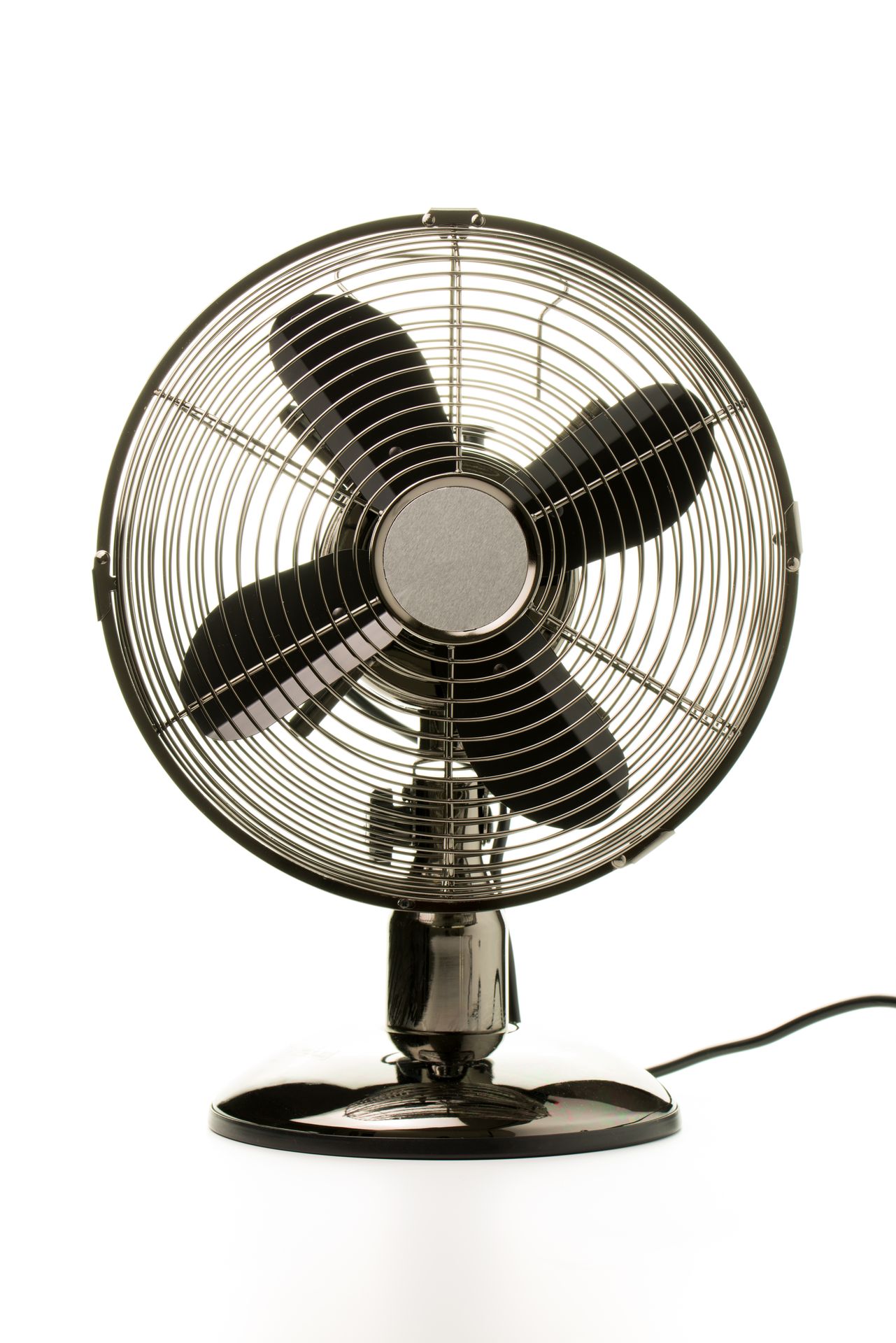
Opening the door or turning on a fan counts as ventilation
OSHA expects engineered ventilation systems capable of consistently controlling exposure. Fans and open doors can actually spread vapors rather than remove them. An open door, portable fan, or window can only play a supporting role in a proper ventilation system.

If no one complains, there’s no exposure problem.
Workers often normalize irritation or avoid speaking up. OSHA’s standard assumes underreporting, which is why monitoring is required even without symptoms.